
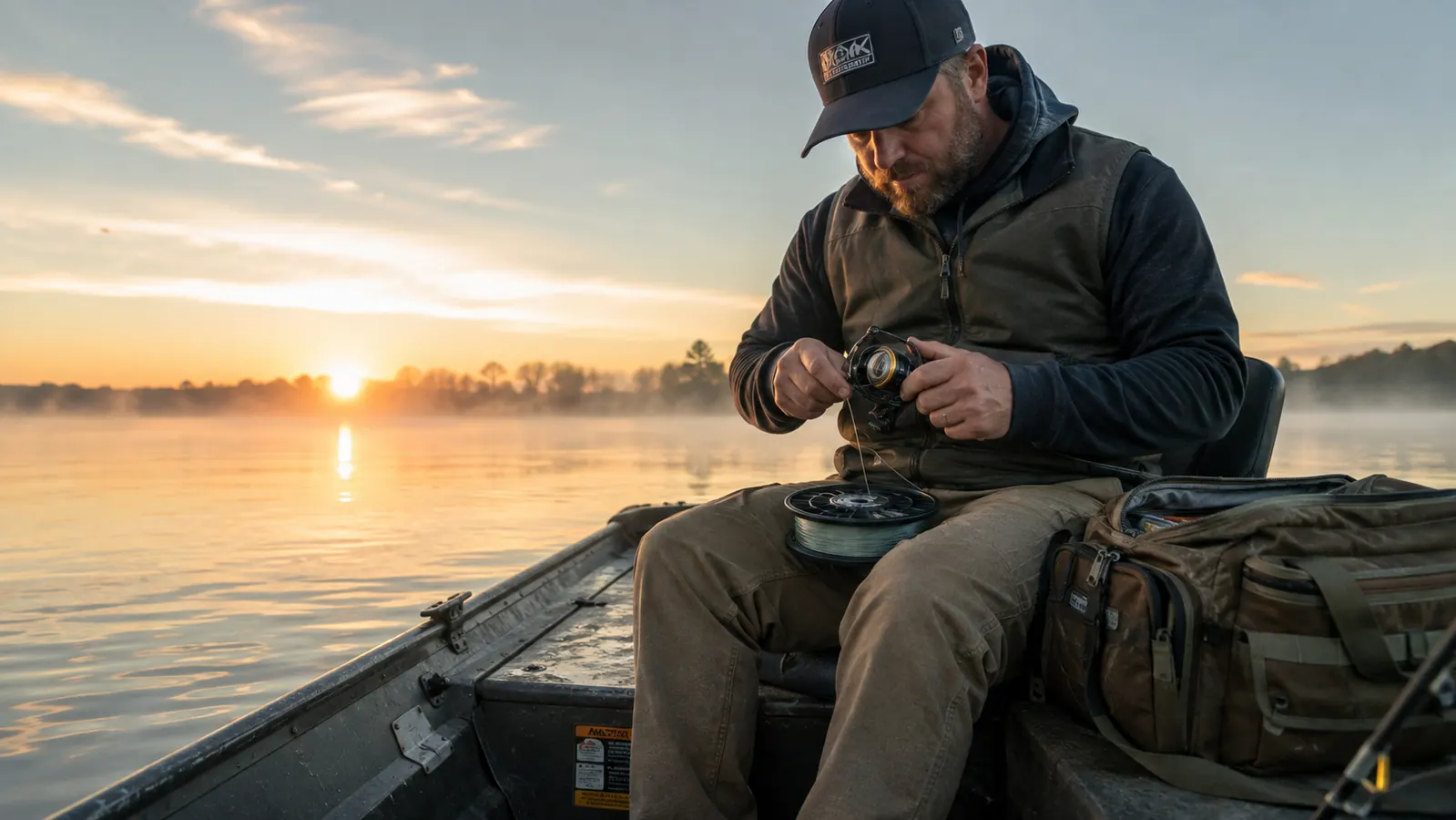
For the first twenty years I fished, every reel I owned wore monofilament, and I defended it. When a bass threw the hook on a 4-inch worm, I told myself I set up late or the fish had the bait sideways. It never once crossed my mind that the line itself was the problem. Mono was what my grandfather spooled, and you do not question your grandfather's line.
Here is the number that finally moved me, and it is not a secret, just a spec nobody reads. On a hard hookset, monofilament at 10-pound test stretches somewhere around 20 to 25 percent before the hook moves. Braid at the same rating stretches almost nothing. That single figure is the whole debate. It is why I put RIKIMARU braid on every reel in the boat this season, from the pitching stick to the catfish rig, and it is why I will do it again. These are the ten reasons the switch stuck, and the two honest times I went back to mono anyway.
The spool that changed every hookset
RIKIMARU braided line gave me hooksets that stick, casts that reach, and a season with no re-spool in sight. Check what a spool runs today and why no reel on my boat wears mono anymore.
Amazon Check Today's Price on Amazon →Hooksets land instead of slipping
Your hookset has a window measured in seconds, and mono spends part of it on itself. At 20 percent stretch, a hard set flexes the line before it moves the hook, and that is exactly when a bass decides to spit the lure. On the RIKIMARU braid there is nothing to stretch, so when the rod loads, the hook moves with it. I set the hook the same way I always have, and the fish that used to shake free now come to the net. That was the first thing I noticed, and it changed the way I fish everything.
Thinner diameter for the same strength
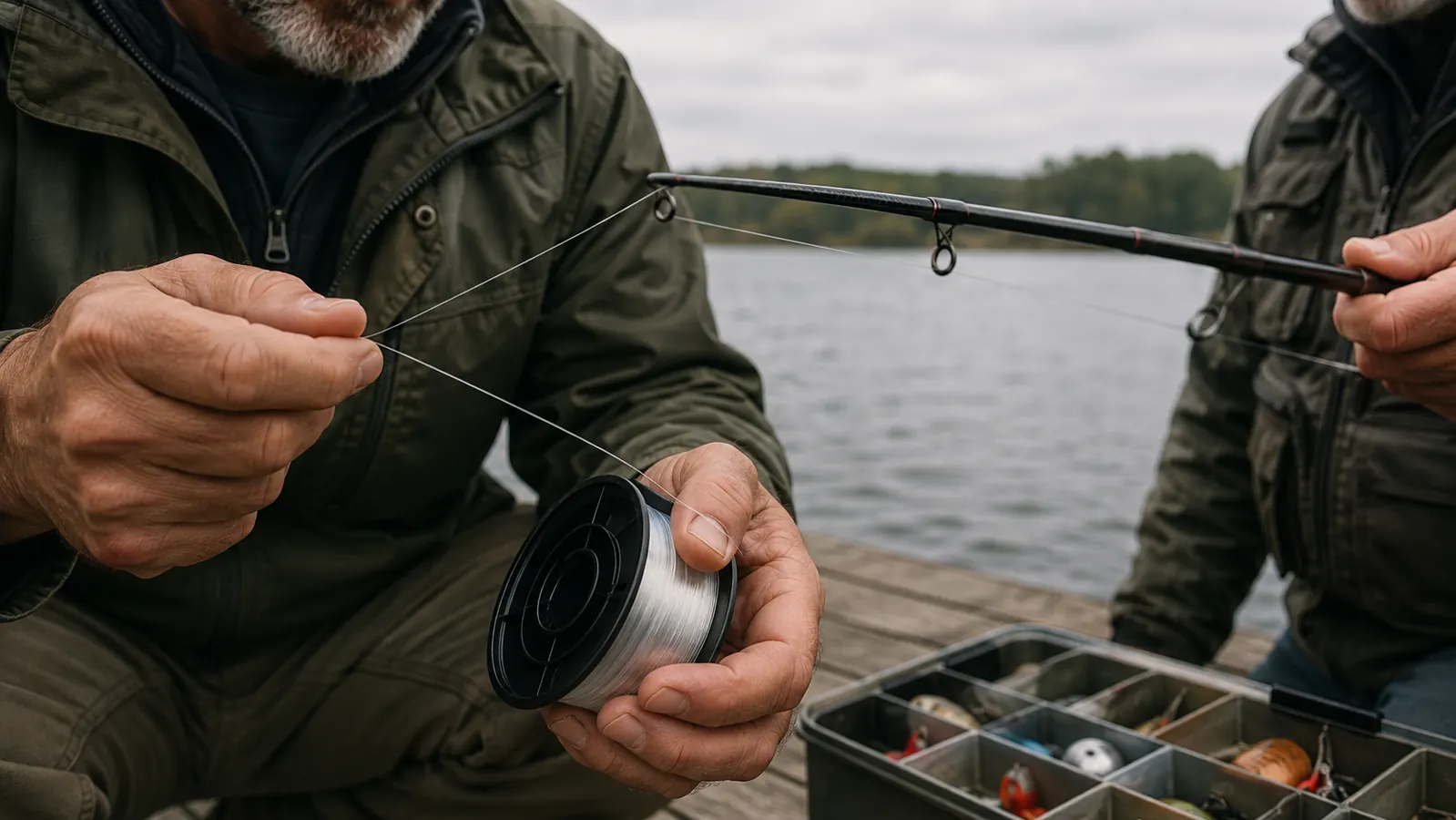
Braid at a given pound test runs far thinner than mono. The 20-pound RIKIMARU spool I run casts about like 8-pound mono used to. Lures sink faster, crankbaits dive deeper, and the wind grabs the line less while it is in the air. The distance gain is real and measurable: I reach pockets I used to have to row up on or pitch a second cast to reach.
You read the bottom like a map
Mono damps the small vibrations that tell you what is under your boat. Dragging a Carolina rig on braid, I feel every pebble the weight ticks across, the change from gravel to sand, the soft grab of a weedline, the slap of a hard clay bottom. You learn to call the bottom before you ever see it on a map. On a flooded creek or a lake you fish blind, that read is worth ten extra casts an hour.
No memory means no coils on cold mornings
Cold mono sits on the spool with a memory of its own, and the first cast of a chilly morning is an uncoiling mess. Braid has no memory to speak of. The RIKIMARU line lays flat, casts flat, and sits straight through the rod guides at dawn, which is when I fish most. I kept a mono rig beside it long enough to prove the difference on the same bank in the same hour.
It shrugs off the stuff that saws mono
Rocks, dock posts, flooded timber and mussel beds all chew through mono fast. Braid handles the same abrasion for a whole season. I dragged tubes and jigs around stumps all spring with the 20-pound RIKIMARU and the line never came back frayed the way mono did by May. On the rocky points behind the dam, that is the difference between losing lures and keeping them.
It does not go stale in the sun
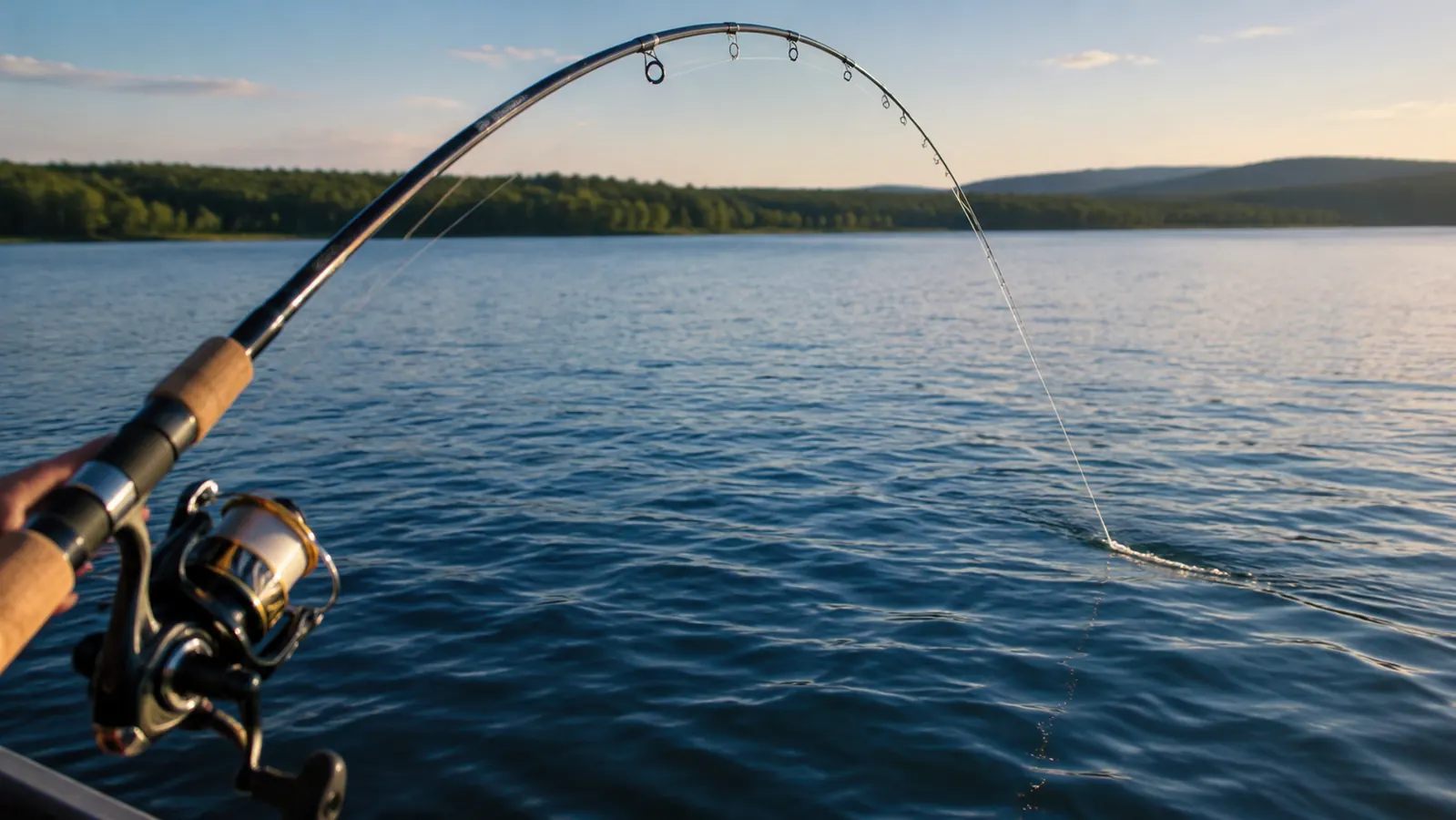
Mono weakens from UV light, heat and repeated soaking. That is why I used to re-spool every spring whether the line needed it or not, and why a mono reel always had a suspicious weak spot somewhere in the middle. Braid holds its strength season after season. The RIKIMARU I spooled in March was still fishing hard in October. That alone paid for the switch.
You feel the light bites that mono hides
A bream nipping a jig sends almost nothing up mono. On braid the same tick comes straight up the line into your hand, like a telegraph. I went from missing most of the soft bites to setting on every one, and the panfish count doubled in the same weekend. For the same reason, grip: I now feel a fish eat and set before the rod tip ever loads.
You always know where your lure is riding
With mono you track your lure by reading its shadow on the water and guessing where the current took it. Braid lies flat on the surface and you can follow it, so you see your drift, you see the moment the line slows like something has it, and you know exactly which pocket your lure is riding through. That is a quiet confidence that shows up in the catch.
One spool fills a reel the way mono never could
Mono swells when it gets wet, so a full spool can bind against the reel. Braid stays the same diameter for years, which makes it the best backing there is. I run 30-pound RIKIMARU underneath with mono or fluorocarbon on top when the fish are shy, and the reel now holds more line than it ever did full of mono. When a big fish runs, I want that extra capacity.
It hauls fish out of places mono gives up on
When a catfish buries into a brush pile, mono gives you one good pull before the hook tears or the line parts. On braid you just keep hauling. I dragged a 12-pound flathead out of a tangle this spring that would have ended the fight on mono, and the line was still sound after. That fish is the whole argument for number ten, and it ties back to the first reason: none of it works if the hookset does not stick.
What I'd Skip
If you fish glass-clear water with light mono and no leader, braid will spook fish before your lure reaches them. The line casts a shadow across a sunny flat. Run a long fluorocarbon leader on those days or keep one mono rod in the boat, and you are fine. That is the honest first exception.
The second honest note is knots. A clinch knot that holds forever in mono slips in braid if it is tied wet or sloppy. Learn a Palomar or a uni knot, wet it, seat it hard, and only then trust the line on a big fish. Skipping that step is how people decide they hate braid.
And if you troll crankbaits off planer boards, keep your mono spool. Stretch works like a shock absorber between the rod and a fish surging against a moving boat. That trolling rig and a light panfish setup under a bobber are the two places I went back to mono this season, and neither one made me doubt the switch anywhere else.
The flathead that came out of the brush pile is the whole argument. On 20-pound mono that fight ends with the hook pulled and the line snapped. On braid I just kept hauling.
For the full season on this line, my long-term RIKIMARU braid review covers the wear in detail, and the RIKIMARU vs PowerPro comparison shows where the budget line gives ground to the name brand.
The spool that killed my spring re-spool
One season on RIKIMARU braid and I am done defending mono. Hooksets stick, casts reach, and the line holds up. See today's price and why every reel on my boat still wears it.
Amazon Check Today's Price on Amazon →