

I have owned exactly one budget combo that survived a full season on my boat, and it is the KastKing Centron. Everything before it snapped at the ferrule, stripped its drag, or seized up mid-season. I bought the Centron spinning combo last April expecting to be writing failure notes by June. I am writing this in late August, and it is still sitting in the rod holder behind my seat. I have been buying budget combos for twenty years. This is the first one that made me stop expecting it to fail.
I fished it three or four weekends a month from April through August, mostly off my boat on my home lake, and I packed it on two camping trips where it spent the whole weekend leaning against a camp chair between casts. Largemouth, crappie, and bluegill. Drop-shots on rock points, weightless worms along laydowns, a few afternoons of small crankbaits. Ordinary tackle, and the combo never felt like the weak link. A rod does not need to be expensive to be reliable, but it does need to be consistent, and consistency is exactly what the Centron dialed in.
The Quick Verdict
The only budget combo I have not replaced mid-season. The drag stays honest, the sensitivity beats the price, and the wear over a full season is cosmetic, not structural.
Amazon Check Today's Price →The Budget Combo That Made It to August
If you are tired of reels that seize by June, this is the combo that earned the permanent rod holder on my deck. It may not be the last combo you ever buy. It is very likely the last one you buy at this price.
Amazon Check Today's Price on Amazon →How I've Used It
I went with the spinning version and kept the rig simple: 10-pound braid tied to a 3-foot fluorocarbon leader, the standard setup for the fishing I do. That put the combo exactly where budget rigs usually fail: casting weightless worms into wind, working a drop-shot in 16 feet of water, and setting hooks across the open deck of my boat. Those are the moments where a reel slips or a blank folds, so I fished the Centron into them on purpose.
Most weekends I run three rods on the deck. The Centron was the middle rod, the one I reached for when bass blitzed bait on top or when I wanted to drop a worm down a channel swing. It is not the most sensitive rod I own. It is the one that got the job done quickly enough that I never once felt the urge to swap it out. Over roughly forty trips, that is the highest compliment a budget combo can earn: it stayed consistent from the first cast in April to the last in August.
The camping trips were the real test. A combo that lives on a boat all season gets looked after. One that rides loose in the truck bed to a campsite, leans against a folding chair all weekend, and gets reeled in with sand on the handle is a different thing entirely. Sand and grit are what kill budget reels, and that is where the Centron out-behaved every budget combo I have owned. By the second trip I stopped worrying about it, which is the whole point of gear: you pack it so you can stop thinking about it.
If the season had ended in June it would have been a good story. What sold me was the stretch from July into August, the weeks when most of my combos start showing their age. The Centron never changed character. That is the one thing I have never been able to say about a combo in this class, and it is why I am writing this review at all.
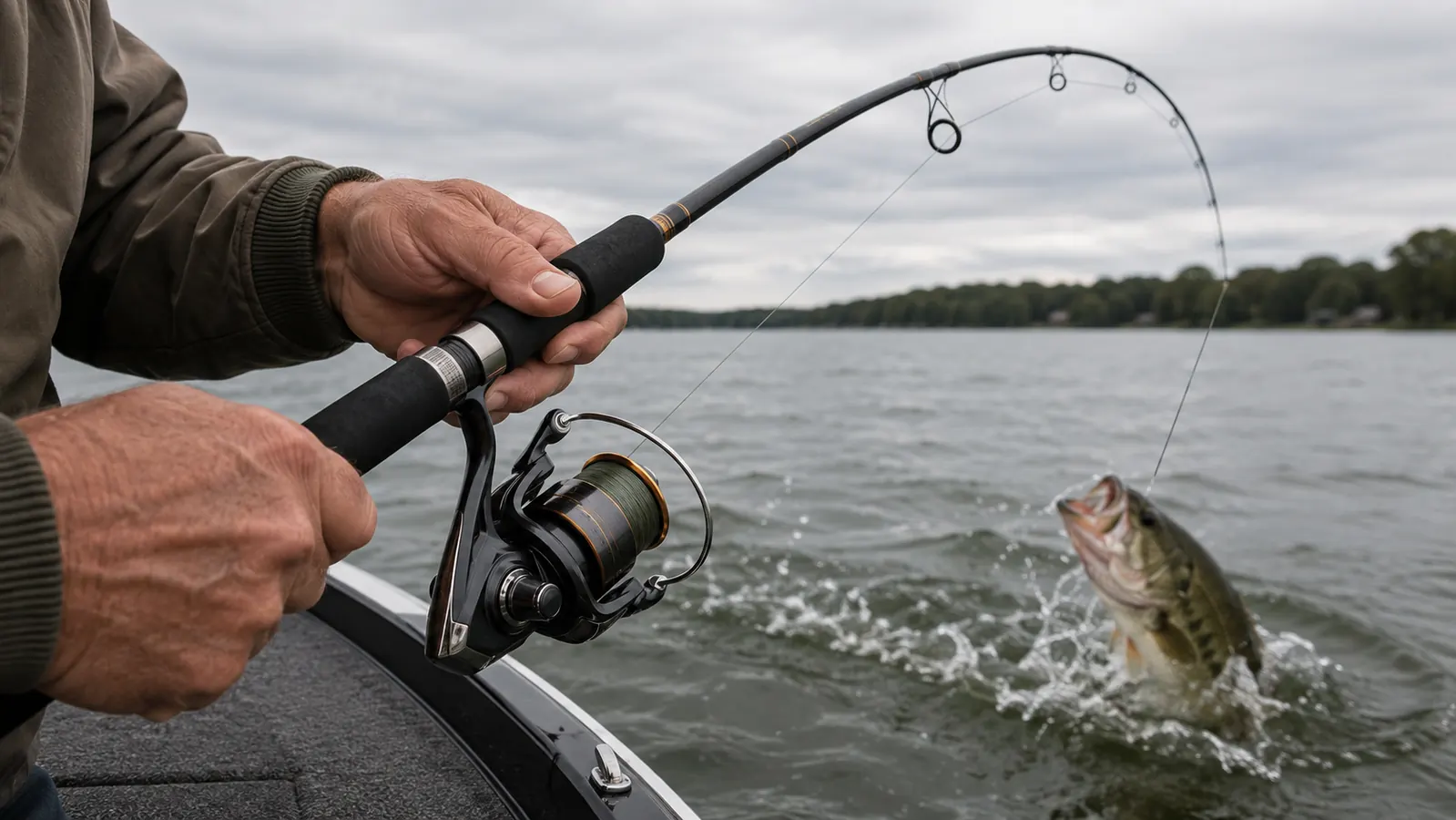
The Reel: Where the Centron Surprises
The drag is the whole story. I set it with a spring scale the first weekend at three and a half pounds, and I reset it three times over the season. It never stepped, never stuck, and last month it pulled a 4-pound 2-ounce largemouth out of a weed bed without giving the fish a free inch of line. A drag that holds its setting through a season of resets is the most underrated feature a reel can have. On a budget spinning reel, that is the entire argument.
The bail tripped cleanly every time I flipped it, which I honestly did not expect at this price, and the handle never developed the wobble that cheap reels pick up after a few months. The line roller stayed smooth all season. Where the money shows is evenness: my last two budget reels had drags that went from locked to free in a quarter turn, and the Centron shares out its settings across the whole range, exactly like the manual says it should.
One afternoon in May I hooked a fish that ran line off the drag for a dozen seconds straight, dragging the spool down to the backing before I could turn it around. The drag stayed smooth through the whole run, no stutter, no sudden free-spool, and the fish came to the net. That run would have ended in a pulled hook or a seized spool on the last two reels I owned in this class. The Centron treated it like a Tuesday.
The Rod: Sensitivity Without the Price Tag
The blank is the surprise. On a slow drop-shot retrieve I could feel the bottom change from gravel to sand, and I could feel a Texas rig tick over a laydown before the fish ever picked it up. That kind of feedback is what you pay double for with a name-brand rod, and the KastKing Centron hands you most of it for a fraction of the money. The drag and the sensitivity are the whole value of this combo; everything else is a bonus.
It loads up nicely on the cast for a budget blank. A 1/8-ounce weightless worm went out seventy feet into a headwind without me working for it, and the tip recovers fast enough that a missed hook-set does not leave the rod quivering for three casts. The guides are small and clean, and braid stays where it belongs with no wind knots to pick out. My one honest complaint on the rod side: this is a medium power blank, so anyone throwing big swimbaits should move down the aisle and keep their money.
Hooksets happen across the whole blank. The rear half loads, the tip drives, and the bend carries down instead of stopping at the first guide, which is the signature of a better flex curve than the price suggests. I set hooks on fish from 6-inch bluegill up to the 4-pound bass, and nothing on the rod side ever pulled. There is no magic in it, just a blank honest about its own flex.
Casting Notes From the Deck
I put most rods through the same test: one long cast into a 10-mile-an-hour wind from the bow. Budget blanks fold on that test, and the lure sails left or dies short. The Centron stays remarkably straight once the blank is loaded, and the line runs clean through those small guides even on the windy afternoons. After the drag, that was the biggest on-the-water surprise of the season.
Accuracy was the quieter win. Pitching a weightless worm under an overhanging limb, bouncing a drop-shot off a dock post, the combo answered the same way on every attempt, and that repeatability matters more than raw distance when you are after bass. I missed my spot on maybe one cast in ten, and on the honest days, the misses were mine, not the rod's. A rod you can trust to put every cast in the same lane makes you a better angler just by being predictable.
Sidearm and underhand casts come out clean, which matters when the bank is brushy or you are fishing up tight to structure from a kayak. The combo never flinched on the short game, and short casts are where budget gear usually betrays itself. Between the wind test, the accuracy work, and the short game, I have no casting complaints left. For this money, that sentence alone is worth the read.

How It Wore Over the Season
Here is the honest part nobody puts in the listing. The finish on the reel seat scuffed during the first month, purely cosmetic, and the blank picked up a pressure mark near the tip from leaning against the console one rough weekend. Neither one has touched performance, and I stopped noticing the seat after the first few trips. If you keep every rod in a sleeve and coddle your gear, this is not the review for you. The Centron is a working tool, and it shows the honest wear of one.
What did not wear matters more. The grips never slipped or spun on me, even wet and sandy. The guides stayed aligned through the whole season, which I had picked as the expected failure point. No corrosion on the reel foot, and the bail spring is still crisp after six months of weekend use. My only real worry is the tip guide ring wearing under heavy braid over a few more seasons, and when that day comes I can replace a tip top myself in ten minutes.
I keep a spare KastKing Centron in the basement, and that tells you how the math lands. When one of these finally wears out or a kid drops it overboard, the replacement costs less than a tank of gas for the truck. A budget combo that holds up through a season is cheaper in the long run than a mid-price combo waiting on a part you keep meaning to order.
I set the drag three times in six months and it never stepped once. That is more than I can say for the last two budget reels I owned.
Where the Centron Gives Ground
No combo at this price wins every category, and the KastKing Centron is honest about the ones it loses. It is not a tournament finesse setup and it is not a heavy-power rig. If you live for big swimbaits or chase muskies, spend the extra money and skip this review. For everything from bluegill up to a 5-pound bass, it is genuinely hard to beat, and that covers the fishing most of us actually do on weekends.
I ran the Centron against the Ugly Stik GX2 for most of the spring, and the two budget combos go different ways with the same money. The GX2 is nearly indestructible and heavier on the wrist. The Centron is lighter on the cast and more sensitive when the bite is subtle, which is why it earned the middle rod holder on my deck. I broke every tradeoff down in my full Centron versus GX2 comparison, because which one is right for you depends entirely on which weakness you can live with.
Two other names keep coming up in this price class, the Piscifun combos and the entry Lew's sets, and I have fished both. They are not bad gear. What they lack is the Centron's balance between sensitivity and durability. If you are comparison shopping, the Centron wins on the two measurements that matter most to a weekend angler: feel on the cast and trust over a season.
What I Liked
- Drag stayed smooth and honest through a full season of resets
- Sensitivity that beats the price point
- Grips, guides, and bail hardware held up to boat work and campsite abuse
- Balanced and ready to fish out of the box
Where It Falls Short
- Finish on the reel seat scuffs early, cosmetic only
- Medium power blank means nothing for big-lure fishing
- Picks up sand grit in the reel after a weekend at camp
- Not the rig for tournament anglers or finesse specialists
Who This Is For
This combo is for the weekend angler whose last rod died in the truck bed. It is for the beginner who wants one rig that will fish a lake, a river bank, and a campsite without needing a second rod. It is for the parent who wants a first real combo for a kid who will not baby it. If you fish hard, put the rod away wet, and pull it out again next weekend, the Centron was built for exactly that pace. I keep a second one in the basement as a spare, which is the real endorsement.
Part of why it works is that it is sold as a matched set, rod and reel together, balanced on the shelf instead of matched by feel in a shop aisle. A rod and reel combo takes the guesswork out of building a setup, and I laid out the ten reasons that matters in a separate piece. If you have ever stood in an aisle wondering whether this reel pairs with that blank, you already know why that helps.
Who Should Skip It
Skip it if you fish tournaments, need a true finesse rod for 1/16-ounce jigs, or throw lures heavy enough to overload a medium blank. Skip it if a scuffed reel seat will bother you, because this is a working combo, not a showpiece. And if you already own a step-up rod and reel that you fish well, the Centron will not tempt you to downgrade. It is the right buy for anglers who would rather spend their money on line and lures, and the wrong buy for everyone else. Knowing which one you are is the whole point of an honest review.
The Combo That Earned a Second Season
Six months in, it is still the middle rod on my deck, and a second one sits in the basement as a spare. If your current combo did not make it to August, the Centron is worth a look before the season closes. You may end up writing the same review next year, and that is exactly the point.
Amazon Check Today's Price on Amazon →