
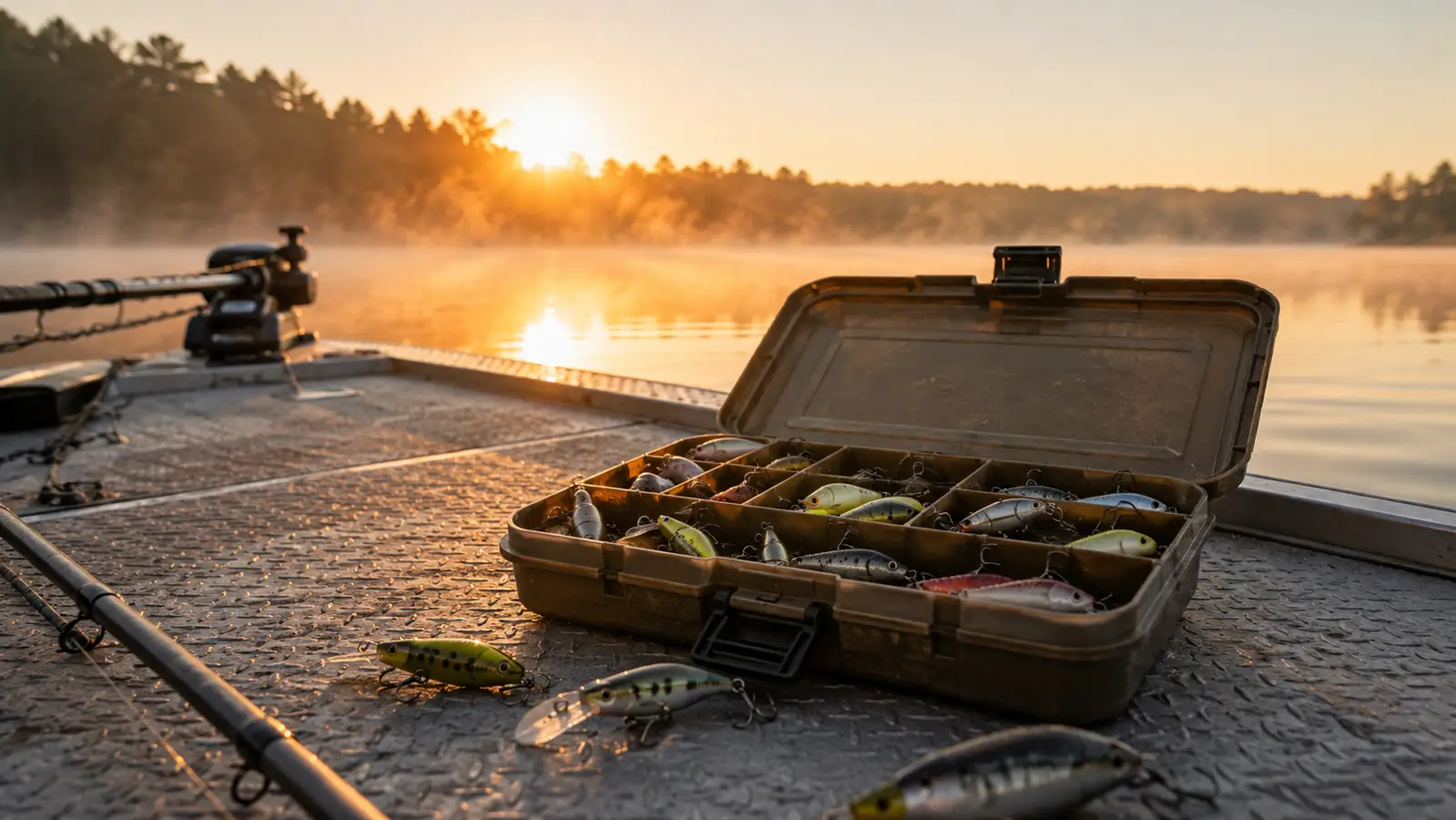
Saturday morning in late April, I stood in the bed of my truck swearing at a jumble of old boxes, hunting for the one chartreuse spinner that had put three bass on the stringer the weekend before. Forty minutes, two skinned knuckles, and a spilled bucket of hooks later, I grabbed whatever was in reach and fished a slow day with lures I did not much like. That is the exact trip that made me order the PLUSINNO all-in-one tackle box, mostly because there was little to lose in trying it. It has been on every outing since, boat, bank, and camping, and this is the long-term version of that review. If you are deciding whether this box is the one, I want to show you what six months of real trips did to it.
Here is the honest short version before the long one. The box is the real product, and it has been worth every mile it has ridden. The included lures are a usable freshwater kit with one consistent weak spot, the treble hooks. Six months in, I still reach for this box on every trip, and I handed one to my brother-in-law not to clear shelf space but because I believed in it. The score below is the box's score, honestly earned.
The Quick Verdict
The box earns the score on its own: latches, hinges, and lift-out trays all held through a season of boat decks and gravel banks. The lure kit is genuinely useful, but the treble hooks are soft enough that you should plan on replacing a few before you trust them with a good fish.
Amazon Check Today's Price →One Box for the Boat, the Bank, and the Campsite
I have carried this PLUSINNO box on the deck of my boat, on gravel banks, and in the back of the truck on camping weekends, and it has held up every time. Check today's price on Amazon and see which kit size fits your fishing.
Amazon Check Today's Price on Amazon →How I've Used It
The PLUSINNO box has gone out with me on roughly thirty trips since the first weekend of May. That means the aluminum deck of my 16-foot boat, a pair of gravel banks on the same lake, a river stretch we waded in June, and one full week of camping in late July where the box rode in the truck bed under a tarp and walked to the water with me every morning.
It has been rained on, bounced over washboard roads, sat in full sun on a rock, and dropped from the tailgate once when my grandson tried to hand it to me before I was ready for it. The latches have never popped open. The hinges still click the way they did on day one. Anyone who has ever found a sprung tackle box in a truck bed knows that this is the single most important thing a box like this can do, and this one does it.
On the boat it lives under the bow seat and comes out when I re-rig between passes. On the bank it sits open at my feet, one tray flipped up so I can see the day's lures at a glance. At camp it is the box on the table that doubles as the evening caddy when I set up rigs for the morning. Same box, three jobs, and it did all three without complaint for a full season.
One note on temperature. It sat in a hot truck cab through a couple of afternoons and the plastic never softened or warped, and the latches still seated tight when the glass cooled off. That was a test I did not set out to run, but I am glad it happened before I trusted the box with a long trip.
What's Actually in the Box
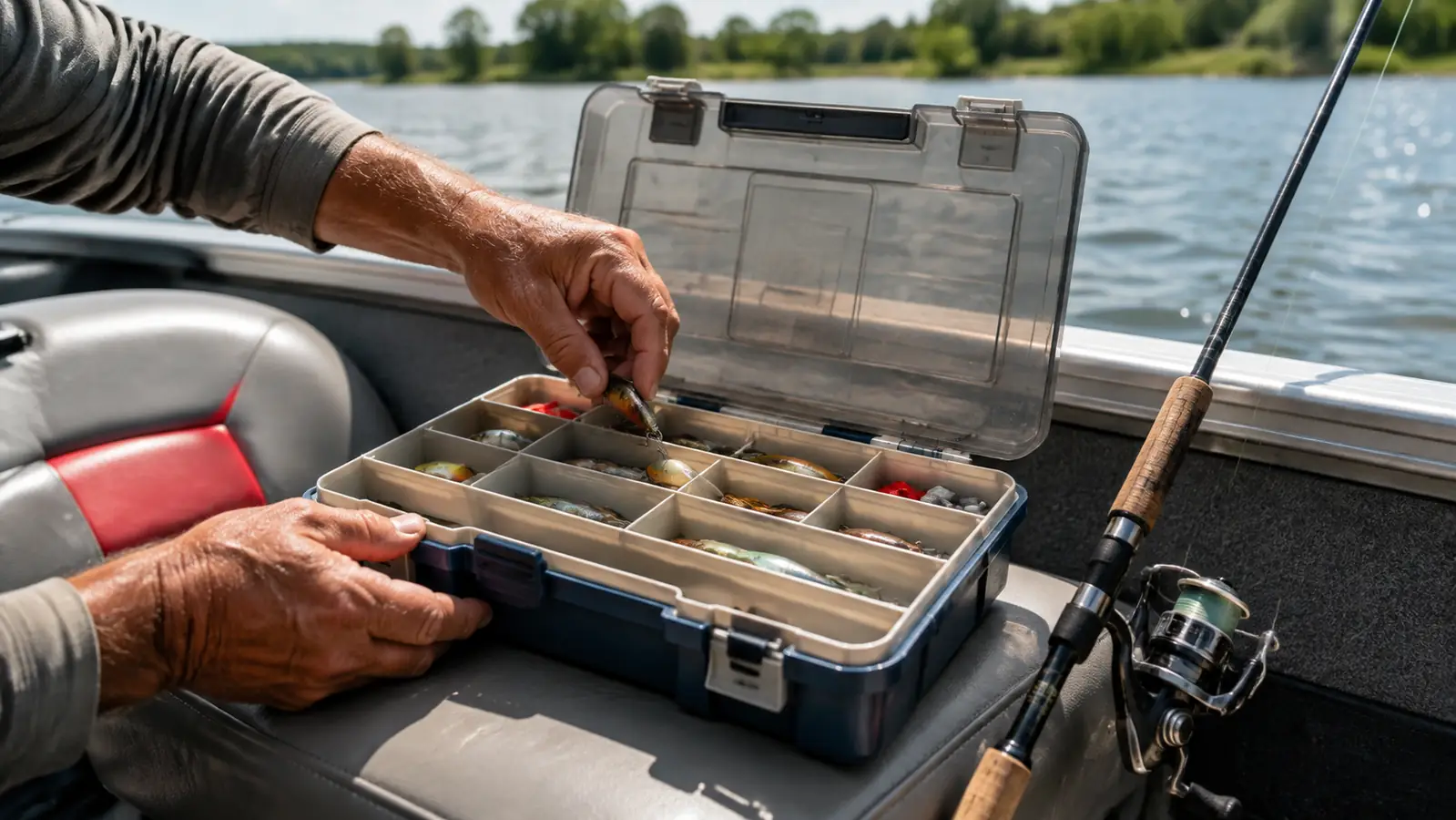
The listing promises a box stuffed with tackle, and for once the promise is mostly true. Inside you get hard baits, a row of soft-bodied grubs, small spoons and spinners, and the terminal tackle a freshwater trip runs through in a weekend: hooks, weights, swivels, beads, and the assorted hardware that always disappears when you need it. It is a kit built for bass, panfish, and stocked trout, which covers most of the fishing within a two-hour drive of my ramp.
Now the honest part, because cheap lure kits earn their reputation somewhere, and this is where this one earns part of it. The lures are entry-level, and you can tell the moment you open the bags. The soft baits are fine straight out of the package. The spinner blades turn freely. The crankbaits run true when you pull them through the water. The weak link is the treble hooks hanging off those crankbaits. They are soft, they dull faster than they should, and two of mine bent straight on hard-fighting fish over the course of the season. I replaced three hooks one evening, a ten-minute job with a pair of split ring pliers, and it turned a so-so crankbait into one I trust.
Two of the included lures are still earning their keep a full season later. The small silver spoon has put stocked rainbows in the net nearly every time I have thrown it. The chartreuse curly-tail grub on a jig head is the first thing I tie on when the bass are holding in weedy water. The rest of the kit is filler, but filler matters when you are fishing water you have never seen and you want to try six different things without opening a second box.
The Box That Held Up
The plastic is thicker than I expected at this price point, and the build shows in the details. The main latch is a solid snap instead of a flimsy clip. The two side latches have never worked loose on rough roads. The trays lift out, which turned out to be the feature I use the most, because I can carry one tray to the water and leave the rest of the box safe on the bank.
One honest design complaint. The big bottom compartment has no dividers, so loose bags of soft baits and extra hook packs slide around and tangle with the weights. I fixed it by dropping two small plastic utility boxes into that compartment, and the fix turned the biggest weakness into the part of the kit I like best. If you buy this box, plan on making that one small change.
After a season of scuffs, drops, and one resting spot that turned out to be a rock, the structure is still straight, the trays slide clean, and the latches seat without forcing. The scuffs are cosmetic and I have stopped noticing them. That durability is the reason this box has outlasted every older box I own that cost less to buy.
What the Lure Kit Actually Caught
Across the season the kit caught more fish than I expected from entry-level tackle. I kept a simple log this year, and the numbers are honest. The small spoon and the grub did the heavy lifting: eleven bass on the grub through August, panfish too many to count on the spoon, and two rainbows on a camping morning when this box was the only tackle within a mile of the water.
The crankbaits got the least use, and not only because of the hooks. They run a little shallow for the deep weed edges I fish most, so they mostly came out on topwater evenings. When they were the right tool, they worked. When the fish wanted something deeper, I reached past them for the jig head and the grub, and that is how the season sorted itself out.
Here is what the log taught me that the marketing will not tell you. A kit like this is not about one perfect lure, because there is not one in here. It is about having the right category covered on the day the fish want that category. The day the bass came up shallow, the box had a spinner for them. The day they moved to the weed edge, the box had the grub. I have spent most of my fishing years without that kind of coverage within reach, and I did not realize how often I went home early because of it.
Six months of boat decks, gravel banks, and one camping trip, and the only things I replaced were three treble hooks. The box itself never bent, warped, or popped open once.
Where It Fits on a Camping Trip
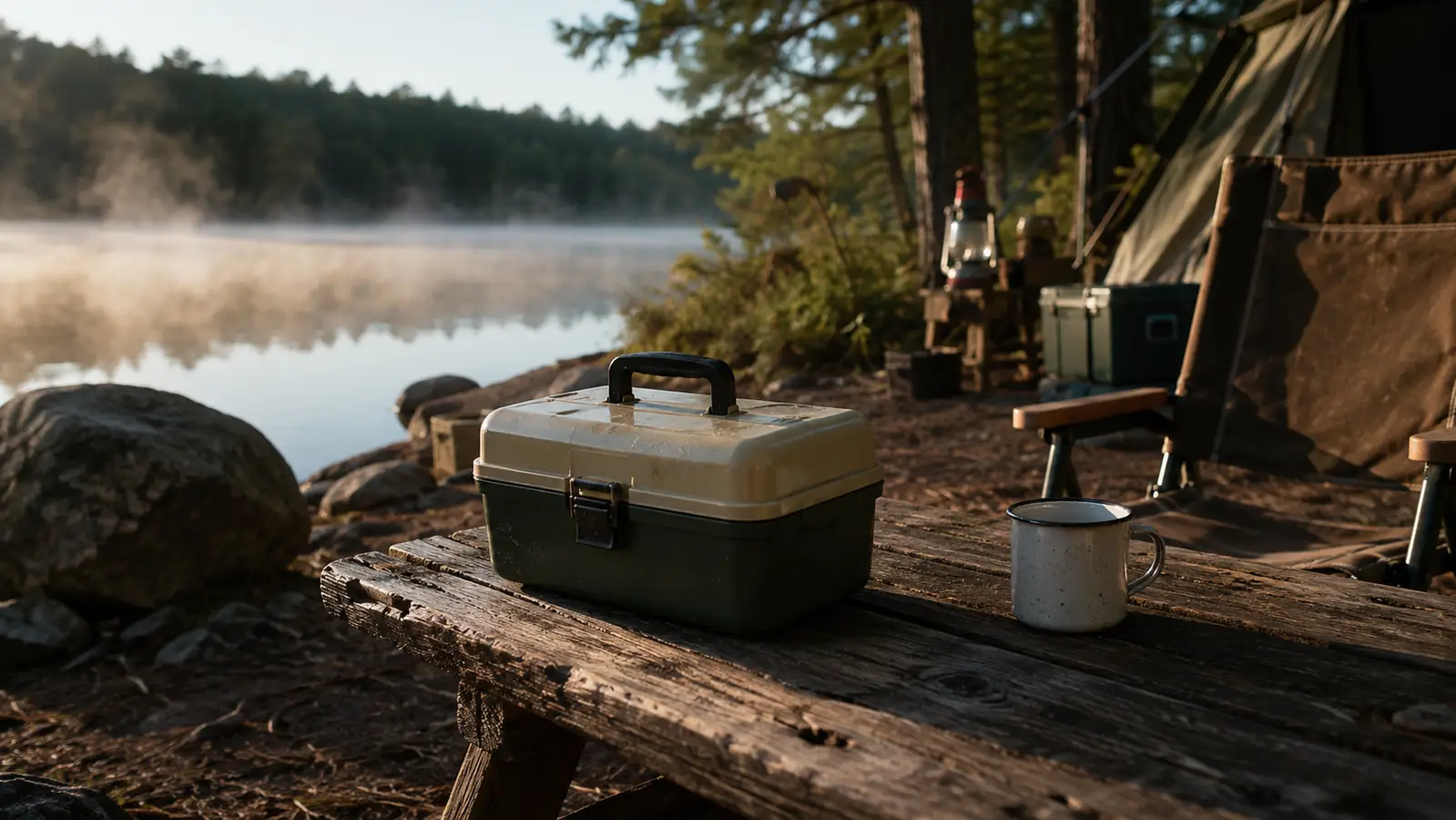
Because I camp on the same weekends I fish, the PLUSINNO box earned a place off the boat too. On the late-July camping week it sat on the camp table as the family tackle box, stocked for whatever water we found at the end of a hike. My grandson could carry it one-handed, which meant he stopped losing single lures in the grass and started bringing the whole kit to the bank with him.
It also simplified how I pack. One box for lures, one rod case, and the rest goes into the normal camp gear. For a weekend that is half fishing and half camp, the all-in-one idea works exactly like it is supposed to work, because there is one less bag to hunt for and every lure you might need is sitting in one place on the table.
The camping connection is not a side note for me, it is the point. I tow the boat, but I also throw camp chairs and a tent in the truck, and my best trips are the ones that start with a lake and end with a fire. This box fits that pattern because it does not demand its own system. It opens on a boat seat and it opens on a picnic table, and the lures in it are the same either way.
What I Liked
- Comes stocked with a full freshwater kit, so it walks out of the truck ready to fish
- The box itself is genuinely well built: latches, hinges, and lift-out trays all held a season
- Small and light enough for a boat deck, a bank, or a camp table
- Cheap enough that kids and grandkids can be rough with it and nobody cries
- Easy to rebuild into your own system as your tackle grows
Where It Falls Short
- The treble hooks on the crankbaits are soft and dull fast; plan on replacing a few
- The big bottom compartment has no dividers, so loose bags tangle until you add your own
- It is a freshwater kit only, so saltwater anglers should look elsewhere
- If you already run a good box full of proven lures, this is mostly redundancy
Who This Is For
This box is for the angler who wants one stocked box and no complicated system beyond it. Beginners, kids, and anyone rebuilding a kit after years of loose tackle in a bucket will get the most out of it. It is also a strong gift for a father, a grandfather, or a new angler, because it shows up ready to fish and it takes rough handling without complaint.
It fits the weekend angler who fishes from a boat one Saturday and from the bank the next. That is the exact pattern it was built for, and it is the pattern I live. One box that moves between the boat deck and the wading bank, with spare lures for whoever forgot their own, has quietly made me the person the family asks to bring the tackle.
If you already carry a classic tray box like the Plano StowAway, my season-long comparison of the two is worth reading before you choose. They solve the same problem in different ways, and the right one depends entirely on where and how you fish.
Who Should Skip It
Skip it if you already have a tackle system you like, because a bag of starter lures is redundancy you will likely never open. Skip it if you fish saltwater, because the kit is built for freshwater species and the small hardware will not survive the salt. And if you are the kind of angler who fishes only a handful of proven patterns from a full wall of tackle, this is not an upgrade, it is a backup box you will reach for twice a season.
The other honest skip. If you buy this box expecting the included lures to become your long-term arsenal, you will be disappointed, and I would rather tell you that now than have you learn it from a bent treble hook on a good fish. The lures are a starting point and a coverage net, not a replacement for gear you already trust.
Everything I have said here comes down to one sentence. The PLUSINNO box is the best value in tackle organization I have owned in years, and I say that while freely admitting the hooks are soft and the fillers are fillers. Buy it for the box, treat the lures as the bonus they are, and you will get your money's worth before the season is half over.
The One Box That Stays Stocked
After a season of boat decks, banks, and campsites, this PLUSINNO box is the only tackle holder I grab without a second thought. See today's price on Amazon and order the kit size that fits how you fish.
Amazon Check Today's Price on Amazon →