
I fished the first half of my life out of a five-gallon bucket, and my back still remembers it. Two hours on a gravel bank was my hard ceiling before I was kneading my low back with one hand and casting with the other. And campfire supper meant standing the whole time, because the only log near the fire always leaned you straight into the smoke. I am a boat angler first, and the bank was just a place to launch, load, and leave, but it took up half of every trip. So the chair problem was never a luxury problem. It was a back problem, and it was also a trip-length problem, because the day ended when the sitting went bad.
This season a Coleman chair with the four-can cooler pouch built into the armrest rode behind the back seat of my truck on every trip. It has sat on riprap, on a gravel bar, on tailgate after tailgate, and around a firepit ring until the logs went gray. It has done more for my weekends than anything else I put in the boat this year, so this is the long version: how I used it, how the frame held up, where it wobbles, and who should not buy it.
The Quick Verdict
The Coleman chair with the cooler arm is the last piece of camp gear I would give up, but it is heavy, a loaded cooler owns the armrest, and the upright seat will not let you nap.
Amazon Check Today's Price →The chair that kept every bank comfortable this season
I carried this Coleman chair on every trip from ice-out to first frost. If your weekends put you on a bank, a tailgate, or a campfire ring, this is the one I reach for.
Amazon Check Today's Price on Amazon →How I've Used It
My season runs from ice-out in early April to the second week of November, and I tow the boat most Saturdays. The chair has been on every one of those trips, plus a good handful of weekday evenings. It comes out of the truck about ten minutes after I park, before the rods even get rigged, and it sets up anywhere the bank is dry enough to stand a cooler. On the lake trips where I also camp, it is the first thing placed and the last thing packed, and it is one of the two reasons the camp part of the weekend does not wreck the fishing part.
The main uses, in order: dawn coffee while I wait for light on the water, a midday sandwich on the tailgate, an hour on a gravel bar while the wind lies down, and the whole evening ring around whatever fire we can find dry wood near. I am 185 pounds and I lean back hard, and the frame has never so much as creaked.
In June I carried it a quarter mile from the truck to a spot on the far bank, and that walk told me more about the chair than a month of sitting in it did. I will get to that in the trade-offs, because it is the honest catch.
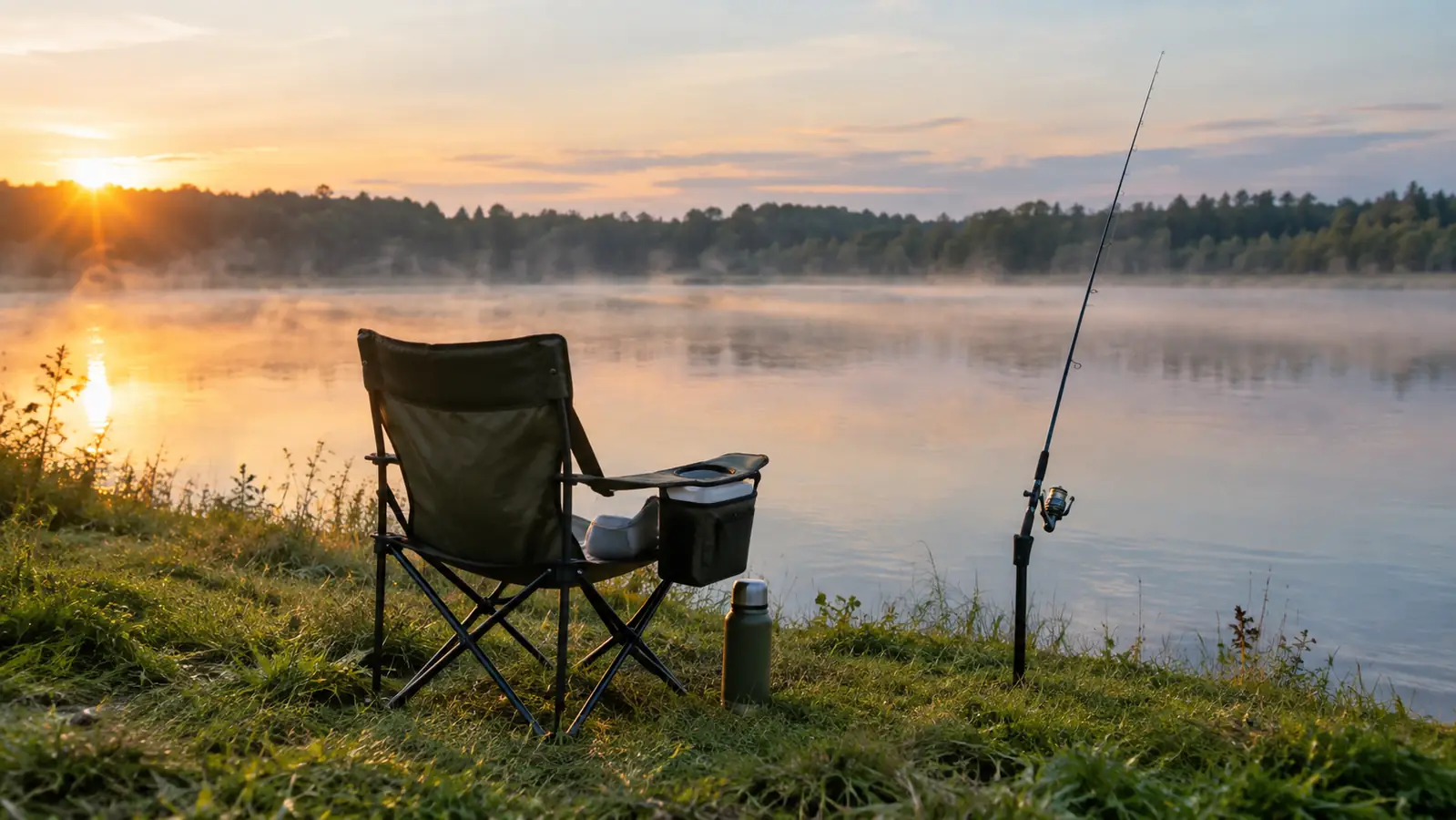
The morning I would not trade came in mid-October. The wind quit at sunrise, the lake went flat, and I set the chair six feet back from the water's edge with my coffee mug in the cup holder. The bite did not show until almost nine, and it did not matter, because for the first time in years I could wait out a slow morning without my low back doing the talking. The five-gallon bucket never let me sit that patient.
The Cooler Arm Is the Whole Trick
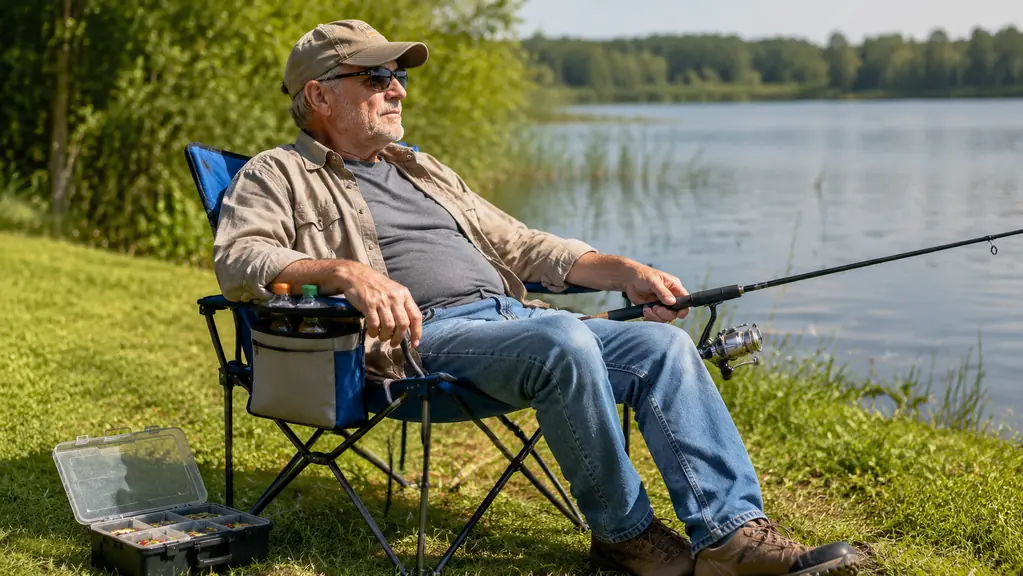
The reason to pick this Coleman over the plain quad chair that costs a little less is the pouch built into the left arm. It holds four standard cans flat, and it also takes water bottles, which stack taller but still fit. There is a drain hole in the bottom, so a wet bottle does not sit in a puddle, and the liner wipes clean with a rag.
What the listing does not warn you about: a fully loaded cooler basically takes over that armrest. You are not resting an elbow on it past about two cans. And by late in the season the pouch had started to sag a bit where the nylon meets the arm frame, stretched by a summer of full loads. You get used to it, because on a hot August afternoon on a sandbar, a cold drink that stays out of the sun is the difference between a long trip and a short one.
A note for anyone expecting this to be an actual cooler: it is a lined pouch, not a machine. It will keep four cold drinks cold through an afternoon, and that is the end of its ambitions. Nothing in there survives overnight or a full day in the August sun. I learned to load it at the same stop where I buy ice, not the night before.
The other arm has the cup holder and the mesh side pocket. The cup holder swallows a tall tumbler without drama, and the pocket is where my phone, my floatant, and a small knife live. Not once this season has it dumped any of them, even when I stood up fast to set the hook.
The seat cushion and the back pad are denser than the foam in most chairs at this price, and they are the reason I can sit in it for four hours of a slow walleye bite and walk back to the boat no worse than I started. That is the quiet feature, and honestly the one I would miss most if it went away.
Four cans and a sandwich stay cold all afternoon, and a cold drink on a hot sandbar is worth more than any rod upgrade I bought this season.
How the Frame Held Up After a Season
The frame is the part I worried about when I ordered it. Chairs in this price class usually let go at a welded joint or a rivet, and a summer on gravel and boat decks is a hard way to find that out. This one has not. The crossbars are still square, all four feet are still wearing their little plastic caps, and the frame bolts have stayed tight.
The fabric has faded a shade where the sun hits it, and there is light pilling where the back panel meets the arm, the kind of wear you have to hunt for. No seams have popped, which genuinely surprises me, because I do not treat the chair gently. It has been rained on, sat on while wet, and dragged over riprap when the wind took it.
Setup and breakdown take about ten seconds and no instruction. You unfold it, it locks, you sit. The carry bag has a shoulder strap, which is a mercy on the short walk from the truck, and it is the only way I have ever gotten it into camp.
The scar it carries is on the right arm, and I put it there. In August a hot skillet slid off the camp stove and landed across the armrest, and the fabric took the mark without tearing through, which is more than the cheap chairs I have owned would have done. Sunscreen and insect repellent have worked into the seat cushion all season too, and both wipe off without a stain. When I winterized the gear in November, the drain hole in the cooler pouch still passed a rinse clean after a summer of wet bottles.
The one fault is not the chair's doing: people lean back on two legs. When somebody rocks this chair onto its back legs, you can feel the frame flex in a way that makes you wince. It has survived every time, but I have stopped handing it to my brother. He gets the bucket now.
The Trade-Offs Nobody Puts in the Listing
Here is the honest catch from the June walk. This chair is heavy, about ten pounds with the bag, and a quarter mile in one hand will have you switching arms twice. I stopped twice on that walk just to set the chair down and roll my shoulder, and if your fishing involves a walk like that, you will feel every step. Mine lives a truck-length from the water, so I forgive it. You decide whether your trips forgive it.
The seat is not wide, and the back sits upright on purpose. That is excellent for staying ready for a rod strike and poor for a nap. You will not sleep in this chair, and it does not recline. If a lounger is what you want, this is not it.
One more sizing note: at five-eleven the seat height suits me, and it suits a taller man fine too, but a shorter person's feet may not reach the ground, and a chair your feet dangle from gets uncomfortable faster than a narrower one. If you are buying for a kid or for someone short, sit them in one before you commit.
The carry bag is snug when the chair is new, and the zipper is stiff for the first month. It loosens up. And the bag is where the chair collected its one scar this season, a small tear at the zipper end from riding loose in the truck bed. A bungee would have prevented it. That is on me, not on the bag.
What Else I Looked At
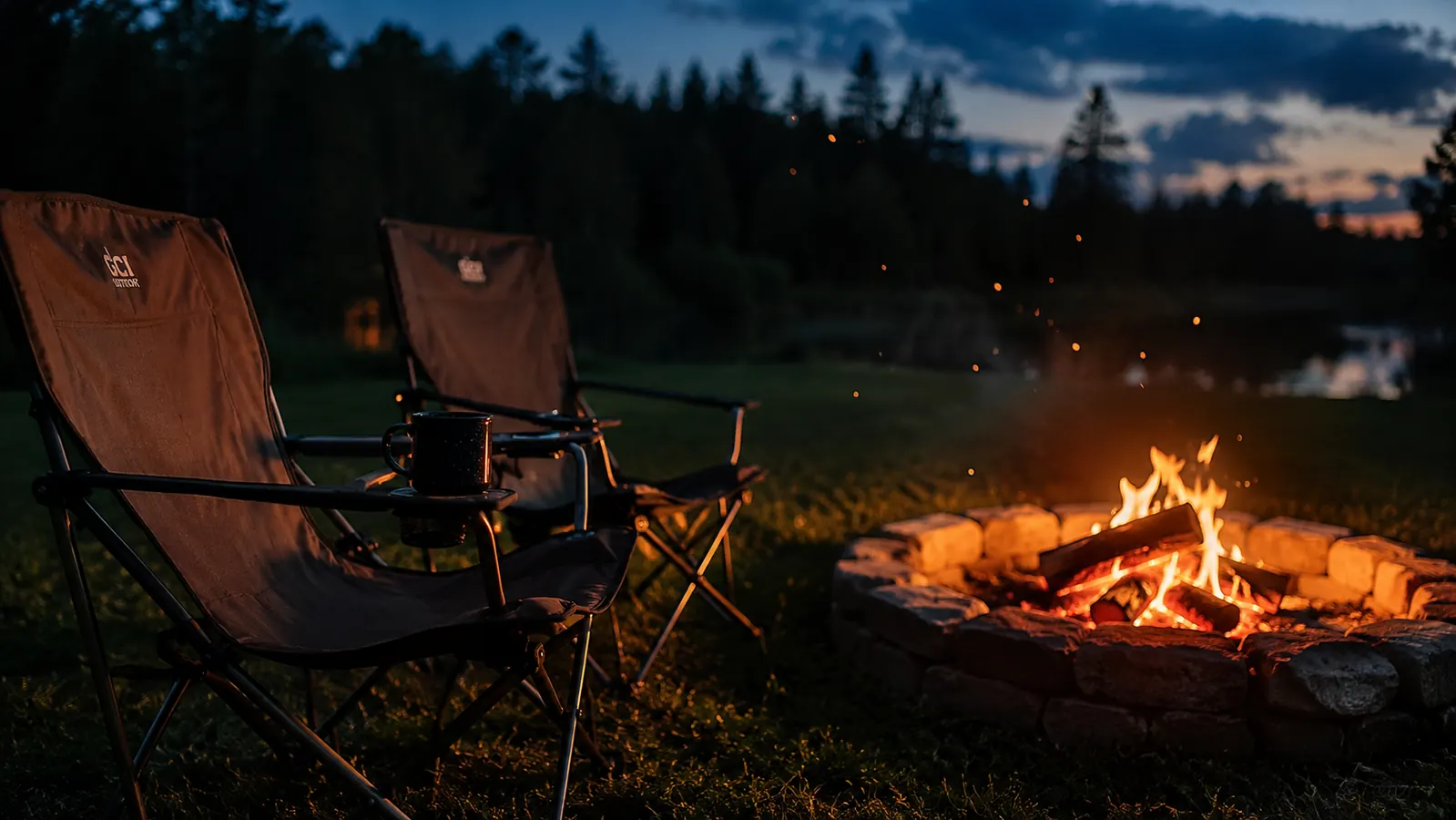
The two things any shopper compares this chair against are a cheaper quad chair with no cooler and the GCI Kickback Rocker. I spent part of the season in the GCI too. On flat ground around a firepit, it is the more comfortable chair, full stop. But it costs more, it is bigger to carry, and a rocker needs flat ground to work. A gravel bank is not flat ground.
I also went through two no-name chairs from a big box store in the two seasons before this one, and both died at a rivet before August. This Coleman outlasted both of them. If you are deciding between this chair and the GCI, I wrote the full head-to-head separately, because they solve different evenings. Short version: the Coleman on the bank, the GCI on the patio.
On the hiking side of my trips, I have carried the little backpacking stools too, the ones that fold down to the size of a water bottle. They weigh about a pound and they disappear in a pack, and they are exactly as comfortable as they sound. There is a place for one on a summit, but there is no place for one at a campfire. The Coleman is the chair for the camp, and the stool is the chair for the hike, and I carry both.
What I Would Change
Three small things, none of them deal-breakers. I would make the cooler pouch removable, so you could wash it out or unload it apart from the chair. I would take another pass on the carry bag, so the chair does not shift when you swing it onto your shoulder. And I would build a little more channel into the cup holder, because the one time I did spill, it was on a bumpy truck-bed road, not on the bank.
I would also not mind a version that weighs about eight pounds instead of ten. But every pound you remove from a chair comes out of the frame, and the frame is the part that has made it through the season. I would rather carry ten pounds of a chair that will be here next year than eight pounds of one that will not.
What I Liked
- The four-can cooler arm works exactly as advertised and keeps drinks cold and close
- Dense seat and back cushions stay comfortable for hours on end
- The side pocket holds phone, floatant, and a knife without ever dumping them
- The frame, bolts, and feet have survived a full season of gravel, rain, and truck beds
- Sets up in ten seconds and moves in one trip from tailgate to firepit
Where It Falls Short
- It weighs about ten pounds, and any walk to your water will make you notice it
- A full cooler owns the armrest, and the pouch sags a little by season's end
- The upright seat does not recline and will not let you nap
- The carry bag zipper is stiff when new, and the bag tore at the zipper end this season
- Not the widest seat, and heavier anglers should read the weight rating stamped on the frame
Who This Is For
This is the chair for the weekend boat angler who camps on the same trips, the way I do. It sets up at the water in ten seconds, it keeps a cold drink exactly where you can reach it, and it has earned its spot behind the truck seat. If your weekends run from bank to campfire, this chair is built for that exact loop. It is also a fine chair for a tailgater, a firepit regular, or a parent who wants a real cushion at the soccer sideline, because the cooler arm works just as well with juice boxes.
Who Should Skip It
Skip it if your fishing involves walking. If you hike to your water or pack a mile down a trail, ten pounds is a lot of chair to carry, and a chair built for your back would serve you better. Skip it too if you are on the larger side, because the seat is not wide and the frame carries a stamped limit you should read before you order. And skip it if you want a recliner. This chair sits you upright, on purpose, and it will never be the chair you nap in.
The last chair I would give up
A season of banks, tailgates, and firepits, and the cooler arm has never let me down. If you are shopping for the chair that stays in the truck, this is it.
Amazon Check Today's Price on Amazon →