
The listing says 4.4 stars across more than six thousand reviews, and almost every one of them mentions casting distance,knot strength,or how easy it is on the wallet. Nobody mentions the color. Nobody mentions what the pound rating actually means at the end of a knot. Nobody mentions what the line does when a hard-running fish pulls the drag and the thin braid cuts into its own layers on the spool. Those are the reviews I actually needed,so this is the one that never got written. This is the honest version after a season of reels spooled at the campsite and checked on a spring scale.
I'll put the verdict up front: RIKIMARU braid is worth the asking price,and I already bought more. But the sell copy leaves out real tradeoffs that only show up across months of looping days: the dye fades fastest right where you watch it,the breaking strength runs soft of the printed test,and thin budget braids punish shortcuts in knot tying harder than premium ones do. None of that loses you fish most days. It costs you time,and time on the water is the one currency none of us gets back. If that sounds like a fair trade,read on. If you would rather the line just sit there and never think about it again,this is not that kind of spool.
The Quick Verdict
RIKIMARU braid gives you most of what the premium spools deliver,and the missing piece shows up as fade,soft ratings,and the occasional dig-in,not as fish lost to the line. It is the honest budget buy,if you are willing to do the maintenance.
Amazon Check Today's Price →The line that rewards maintenance
Fade tells you when it is done. Fray tells you where it is weak. And a spring scale tells you what the rating actually means. That is the honest operating manual for RIKIMARU braid.
Amazon Check Today's Price on Amazon →How I've Used It
The season ran mid-April through early November,about forty-five trips across three places: the home lake,a mountain reservoir an hour deeper into the hills,and a stretch of river where I camped most weekends. I spooled RIKIMARU on six reels in three weights,because the person this line is aimed at usually has more than one rod on the water. The 6-pound went on a light seven-foot trout rod I carry on the hikes in off the trailhead. The 20-pound went on a 3000-size spinning reel for topwater at the reservoir. And the 40-pound went on a heavy baitcaster for flipping thick mat grass and wood on the river.
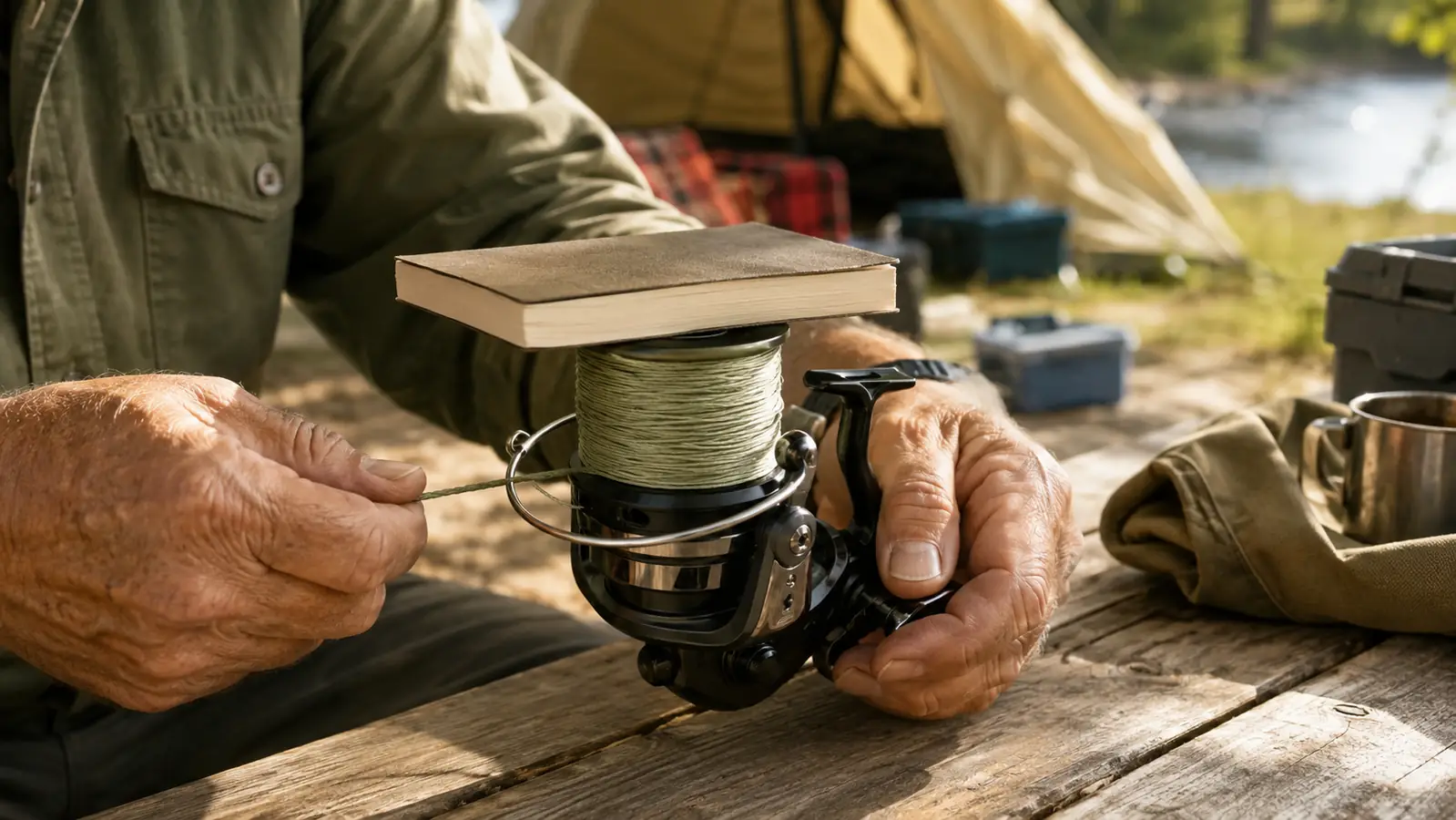
Everything got spooled the same way,mmostly at the campsite table on Friday evenings while the coffee cooled: mono backing up the spool,wet knots,firm even tension,and a paperback balanced on the line spool to keep it from free-spinning while I cranked. The factory spool came off in clean layers with no memory humps,and laid flat on all six reels. If I were spooling a premium braid the ritual would look identical,which is part of the honest point I kept coming back to all season.
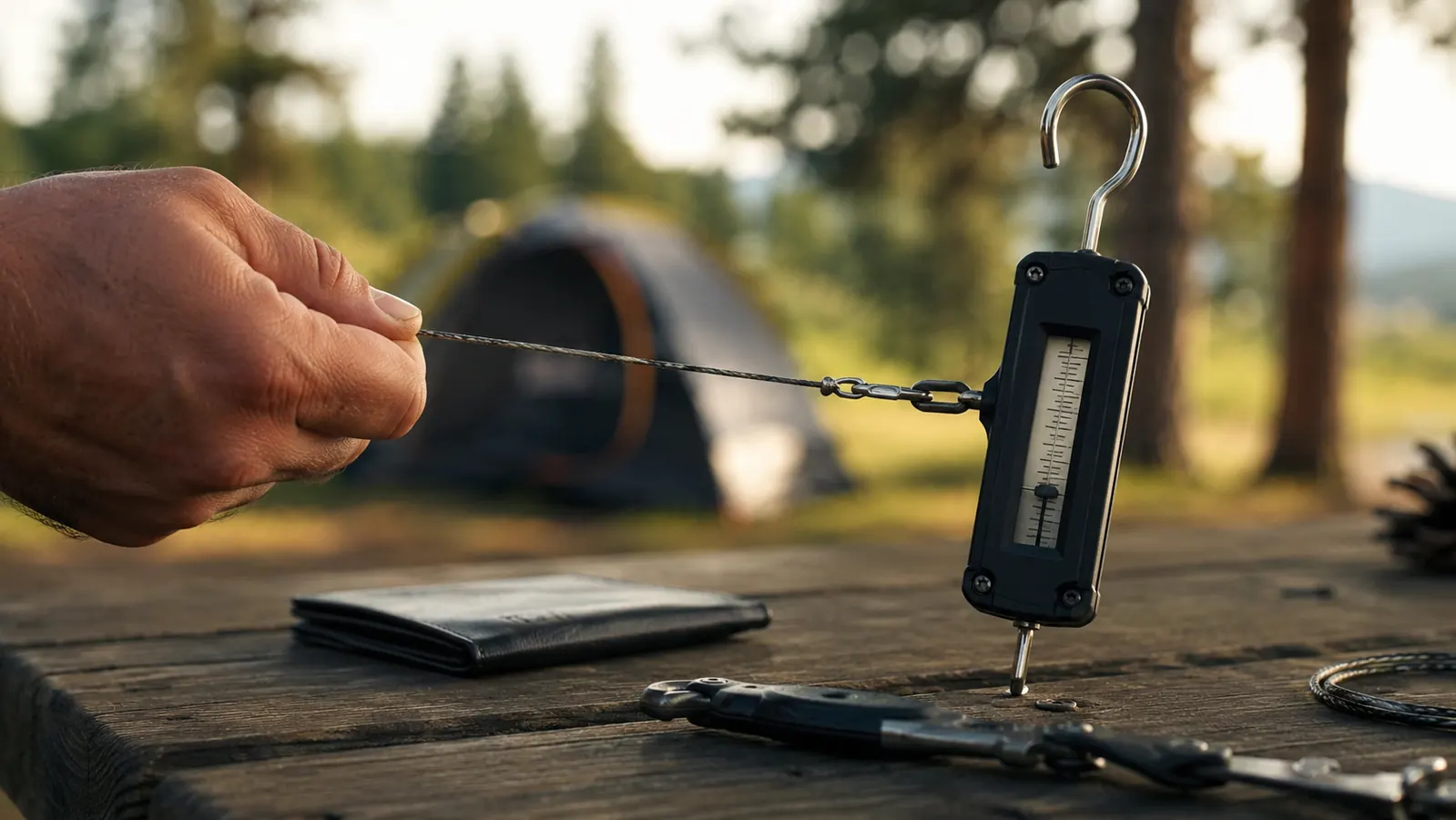
I also put every weight on the spring scale at least once. That part deserves its own section,because it is the number nobody reviews: what the rating means at the end of a knot,not at the end of the factory spool. The setup was simple: a couple of palomar loops around the scale hook,thewed knot,and a steady pull until something gave.
What Six Thousand Reviews Don't Tell You
The reviews will tell you about casts that sailed. What they won't tell you is that the dye fades,and it fades in exactly the spot you need: the near end of the line,the first reel-length that gets all the sun,all the scrapes from the deck,and all the slack-line watching. By August,the color in that stretch had lightened noticeably,and the rest of the spool still looked new. If you tie on fresh line every March,you will probably never care. If you fish through into fall like I do,you will notice it most on the days when you are staring at that exact section waiting for a bite.
Here is the trade nobody writes down: budget braid saves money on the dye vat. That is where the price difference lives. The fade is not a flaw that loses fish;whatever species are eating that day are eating for the way the bait moves,not for the shade of the line. It is cosmetics,and treating it like anything else just sets you up to be disappointed by a line that is fishing fine. I honestly count the fade as a living condition report: when the near end goes pale,it has been fished hard,and when it goes fuzzy too,it is probably done. That information has value if you fish the way I do.
One more thing the reviews do not warn you about: thin braid hides line twist until it is too late. On the spinning rig,the 20-pound picks up twist through a long day of casting off the reservoir bank,and because the line is so thin,the twisted coils sit hidden,instead of showing as visible loops the way mono does. You find out an hour in,when the bait spins on the drop,and the line kinks below the rod tip. The fix ends up routine: let the bait spin freely on the retrieve,re-spool the last ten yards every couple of trips,and check the setup before first light instead of after first tangle. Nobody puts that in the listing either.
The thin diameters also cut the margin for error in everything you do at the end of the line. A thick mono knot forgives a sloppy cinch,because the material piles up and grips itself. Thin braid forgives nothing: if the wraps are not there,the tag is not seated,or the knot is cinched dry,it can slip hours later,on a fish,out where you cannot see it. That margin is what makes the rest of this review longer than it needs to be.
Knots: Where Budget Braid Shows Its Hand
I run fluorocarbon leaders on most setups,and that means an FG knot at the join. The rule that worked all season: six wraps minimum,wet cinches,and the tag trimmed to a quarter inch. At six wraps with a proper cinch,the FG held through pad flipping and river wood. I tried the sloppy four-wrap version exactly once,on the 20-pound,and the knot popped on a medium bass two hours in. That fish is on me: I tied the shortcut one minute into a cold,dry morning. Budget braid does not forgive shortcuts,and it does not pretend to.
The uni-to-uni to leader held everywhere else with zero drama,though it takes twice the wraps of mono to land the same. A blood knot,that freshwater classic most of us learned first,does not work here at all: braid is too slick,and the two strands pull through each other under load. If you are coming off mono entirely,plan to learn the FG or the uni-to-uni before you spool. The learning curve is gentle. The getting-lazy-about-it curve is not.
The deeper honest point: every connection on a budget braid needs the same ritual you would give a premium spool,and the premium spool rarely demands it,because its coating grips a little better out of the box. So the real difference between this line and something at double the price is not raw strength. It is forgiveness. This line is strong when you are careful,and being careful costs nothing.
The 40-pound rating pulled twenty-nine on my spring scale,and I still fished it hard all fall,because a knot-held twenty-nine beats a rated forty that snaps.
Load: What the Printed Rating Actually Means
Here are the scale results,best two of three pulls each: the 6-pound broke just under six,the 20-pound broke around seventeen,and the 40-pound broke around twenty-nine. Every single one came out soft of its label,every single one broke at the knot,and the scale hook. That is not unique to this spool. Every braid I have ever scaled strings soft at the knot,because the knot is the weakest point in any braided system,and premium spools come in softer than their marketing suggests too. The honest way to read it: a budget braid's rating is the top of its confidence band,not a promise,and the band is wider here than on the expensive stuff.
Does that matter on the water? Mostly no. My hook sets do not need forty pounds of actual strength;they need enough that the sudden stretch-less jolt does not pop the knot,and a thirty-pound hook set into open water is deep into that margin anyway. What the soft rating means is this: when I flip 40 into a mat and a fish turns under the grass,that extra fifteen percent of rated strength is what the premium spool buys you,and whether you need it depends on how often your fish run into cover that demands it.
The other load behavior nobody writes about is digging in. After a five-pound reservoir spot took drag for the better part of a minute on the 20,the thin braid cut into its own layers on the spool,and the next morning's first cast threw a tangle that cost me ten minutes,and thirty yards of line. The fix is cheap,and entirely on me: thumb the spool during the drive home,pull the line tight and level when you get there,and never leave a spool loaded with a hard-fighting fish's drag overnight. Premium braid digs in too,just later,because its surface is slicker. With this line,digging-inis part of the maintenance conversation,not an accident.
Alternatives,and the Case for Spending More
The two names that come up every time are PowerPro,and Sufix 832,and both earn their reputations: better dye,slicker coating,and tighter tolerance on the rated strength. I went deep on the head-to-head in the RIKIMARU vs PowerPro comparison,but the short answer here is this: if your season is measured in heavy cover,and daily rock,the premium spool is honest insurance,and you will not begrudge it. This line is not pretending to be that spool.
For the rest of us,the honest math is about where the savings lands. Spooling six reels at once is where budget braid earns its keep,because the gap between this and the premium stuff compounds across every spool on the boat,and that difference buys hooks,spoons,and soft plastics,which are the things that actually catch fish. I lost zero fish this season to the line itself. I lost time to the maintenance,and to the fade. I will make that trade again,because on the water,time is the only currency I actually budget.
One compromise I have landed on,and it is worth stealing: keep one premium spool for the rod that gets the most demanding job,and run RIKIMARU on everything else. On my boat,that is the heavy flipping rod,where the extra forgiveness of a more expensive coating genuinely earns its keep twice a month,and the other five reels go on this budget spool without me lying awake about it. It is not the answer the forums will give you,because forums talk in absolutes. It is the answer a season of honest fishing gave me,which is steadier.
A Note for the Campground
Since the bank is rarely where my weekend ends,one honest note for the camp side of things. A thirty-foot length of this braid has become part of my camp kit: it makes emergency guylines that hold a tarp through a gusty night,it loops into a repair for a pack strap,and it will lash a rod to the roof rack better than half the cords in my truck. The fade that annoys me at the reel end is invisible out here,and the thin diameters mean a full coil rides in the bottom of a pouch. It is not paracord,but it has bailed me out of three camp situations this season that would have been four-mile walks or wet gear. As standard camping line it is nothing. As cheap insurance on the same weekend trip,it absolutely is.
The one rule I keep for the camp side: never borrow line off a spool that is mid-season on a reel for the heavier camp chores. The used near end has taken the sun and the scrapes,and it owes you that. The fresh middle of the spool,though,has come off clean every time I have reached for it,and it has held every tarp and every re-tie I have put it through. In the spring,I started carrying one dedicated spool just for the camp bag,and it has been the least dramatic piece of gear I own.
What I Liked
- True zero-stretch feel,so light bites arrive as the bite starts,not as the follow-up
- Thin diameters across 6 through 40 pounds cast clean,andpack more line per spool
- FG at six wraps,andthe uni-to-uni held every leader connection all season
- The fade works as a living wear report instead of a cosmetic flaw
Where It Falls Short
- Breaking strength runs soft of the printed label,most at the knot
- Thin line digs into itself on the spool after a hard run if you leave it loaded tight
- The dye fades fastest in the near end,exactly where you watch it on a slack-bite day
- Zero forgiveness for shortcut knots,dry cinches,or lazy spooling
Who This Is For
Buy RIKIMARU if you are the kind of angler who actually enjoys the weeknight maintenance: spooling,knot practice,and a spring scale in the garage. Buy it if you fish several rigs,and want six spools covered without the premium price spread across all of them. Buy it if you tie leaders anyway,and already run an FG or uni-to-uni,because this line rewards the ritual you already have. Andbuy it if you camp on the same weekend trips,and like the idea of a small coil of line behind the seat of the truck that doubles as camp repair.
Who Should Skip It
Skip it if you want the line that ships with to look the same in November that it did in April,because the fade will grind on you all season long. Skip it if the maintenance conversation,wet knots,trimmed tags,and thumb the spool after hard runs,sounds like a second job,because premium braid's slicker coating forgives more of that. Skip it if your season is mostly heavy cover,and rocks,where you need the top-shelf abrasion reputation on tap every single weekend. Andskip it if you read ratings as floors instead of confidence bands,because a spool that pulls soft of its label will always sit wrong with you,even when it never costs you a fish.
The honest budget braid
Fade,soft ratings,and dig-ins are the truth nobody puts in the listing. If you fish like me,they are a fair trade for a spool that casts all season,and holds every knot it is given. Check the current price,and decide whether the trade is yours.
Amazon Check Today's Price on Amazon →